The first month of autumn brings interesting news in the world of medicine. Expand your horizons with the medical equipment company Loran!
For the first time, an 8-year-old boy from the Ivano-Frankivsk region underwent a bone transplant printed on a 3D printer
A biopsy and all necessary examinations revealed Ewing's sarcoma. This type of cancer is most common among children and adolescents. Every year it is detected in 3 children out of 1 million. The tumor affected almost 30 cm of the femur. To save the leg, it was necessary to remove the tumor and implant an implant at the site of the lesion. While preparing for the surgery, which took about six months, the boy underwent chemotherapy.
The first step was to remove the tumor itself. The engineers from Kyiv made a titanium implant and prepared three versions of different lengths. They were all printed on a 3D printer. The design of the implants took a month, and printing took two weeks. After a biopsy, doctors removed the bone that was affected by cancer and in its place installed an implant of the right size that would grow with the boy. The surgery lasted 6 hours and was successful.
Now the boy has returned home to Ivano-Frankivsk. He will undergo several courses of radiation therapy and polychemotherapy, as well as a bone marrow transplant.
Ukraine uses artificial intelligence to diagnose brain damage
The BrainScan telemedicine project was introduced in Odesa for the first time. How does it work? Artificial intelligence automatically analyzes computed tomography images and detects pathologies, and the system speeds up the process of diagnosing diseases several times. This is a very important factor when time is short. In a few minutes, a doctor can decide how to treat a patient.
According to the Ministry of Health, the use of a neural network to analyze CT brain scans has yielded good results, so this experience is already being successfully implemented.
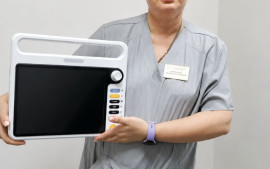
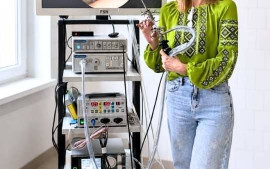
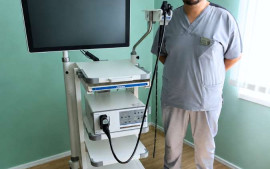
Loran also presents high-quality equipment for telemedicine, such as the dermatoscope, otoscope, ophthalmoscope, trichoscope, and endoscopic video camera. All of this medical equipment allows for close-up examinations, broadcasting images or video to the screen in real-time, storing media files, and recording changes over time.
A US man underwent a pig heart transplant
According to medical experts and doctors at the University of Maryland, a Navy veteran was threatened with death from heart failure, but due to other health problems, he could not undergo a traditional classical heart transplant. Therefore, doctors in Maryland performed a pig heart transplant to prolong his life.
Since the human immune system immediately destroys foreign tissue, attempts to transplant organs from animals to humans have been unsuccessful for many years. Now, scientists are once again intending to use gene modifications on pigs to make their organs more similar to human ones.
The pig heart, which was provided by Revivicor from Blacksburg, Virginia, has 10 genetic modifications - removing some pig genes and adding some human genes to make it more optimal for human immunity.
Follow the news in the world of medicine with the Loran team! Share this article on social media - share your knowledge with your colleagues and friends.