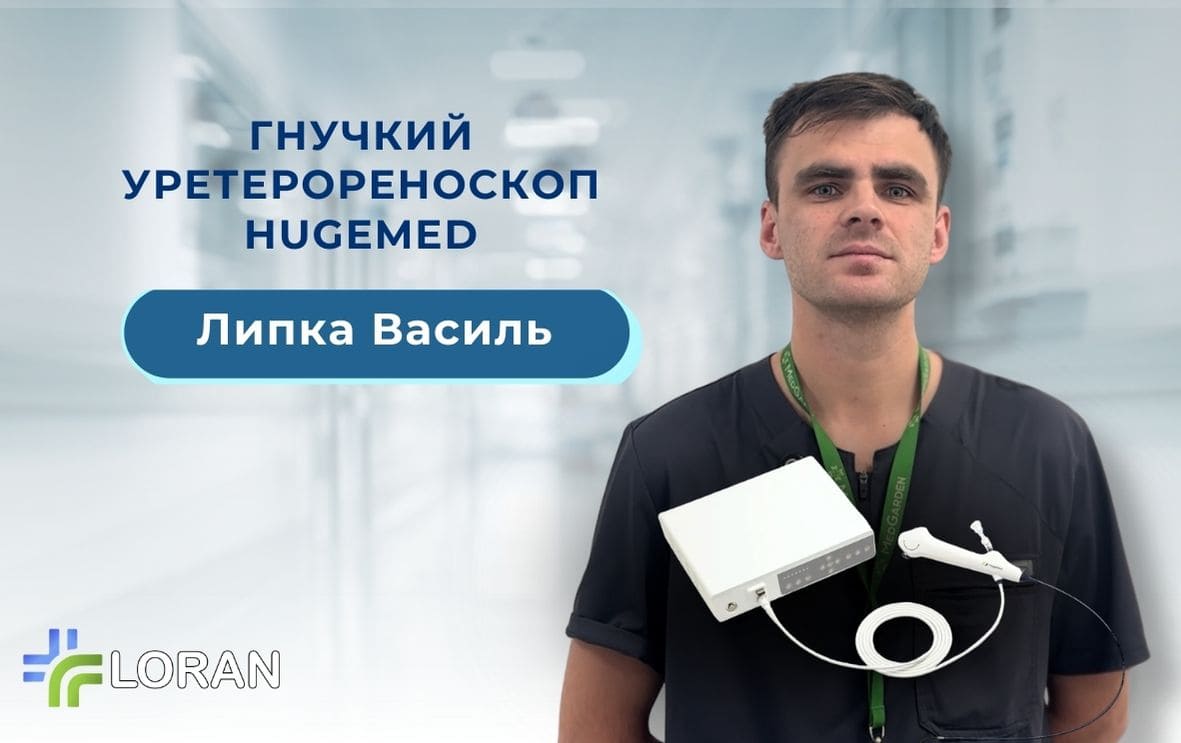
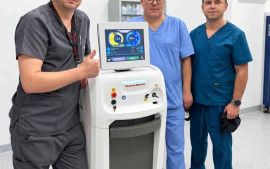
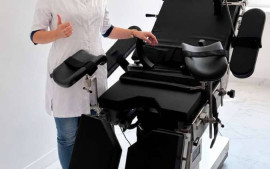
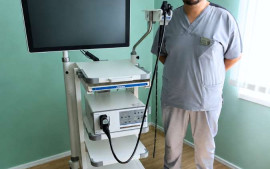
Modern urology is increasingly transitioning to minimally invasive endoscopic techniques for the treatment of urolithiasis. Retrograde intrarenal surgery (RIRS) has become a standard in many clinics due to the ability to effectively work within the renal collecting system without open access. Practical experience in using the flexible HugeMed ureterorenoscope is shared by urologist Vasyl Lypka, MedGarden Medical Center (Chernivtsi).
Endoscopic treatment strategy
In the clinic, most surgical interventions are performed endoscopically. This approach minimizes tissue trauma, reduces hospitalization time, and ensures faster patient recovery. The quality of visualization and instrument maneuverability during intrarenal procedures plays a key role in this process.
According to Vasyl Lypka, flexible single-use HugeMed ureterorenoscopes are used in daily practice, providing stable imaging and predictable performance during kidney procedures.
RIRS: control in complex anatomy
Retrograde intrarenal surgery requires maximum precision, especially when working in lower calyces or in cases of complex pelvic anatomy. Instrument maneuverability and the ability to reach the stone without excessive pressure on the mucosa are critical for patient safety.
The flexible HugeMed ureterorenoscope combines an ultra-thin diameter with a preserved working channel, enabling effective laser lithotripsy even in complex clinical situations. The availability of different diameters allows for individualized approaches depending on patient anatomy and pathology.
Clinical advantages of the ultra-thin format
Special attention should be paid to the ultra-thin 6.3 Fr version, which expands the possibilities of endoscopic treatment. The reduced diameter improves navigation within renal calyces, enhances intrarenal pressure control, and enables the “no-touch” technique.
In practice, this means reduced mucosal trauma risk, the ability to work in cases of strictures, and decreased need for preliminary stenting or the use of introducers. This approach is particularly relevant in both adult and pediatric urology.
Ergonomics and operational stability
For a surgeon, it is important that the instrument performs predictably throughout the entire procedure. HugeMed ureterorenoscopes provide high image quality благодаря a microcamera at the distal tip and feature a convenient photo and video capture system for clinical documentation.
A distal deflection angle of up to 285° allows access to all calyx groups, including the lower ones, which is a key factor during RIRS. According to the physician, the combination of maneuverability, stable visualization, and user-friendly control makes HugeMed one of the most востребованных instruments in daily practice.
Video experience for practicing urologists
In the video, Vasyl Lypka demonstrates the use of the flexible HugeMed ureterorenoscope directly in the operating room, commenting on navigation and workflow during retrograde intrarenal surgery.
Also watch the video on our channel: “Vasyl Lypka: holmium lithotripsy and prostate enucleation with a 60 W laser from Quanta System”. The material will be useful for urologists performing RIRS, working with laser lithotripsy systems, or planning to expand the endoscopic direction in their clinic.
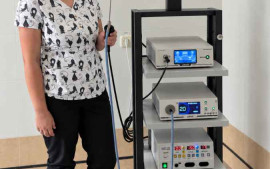
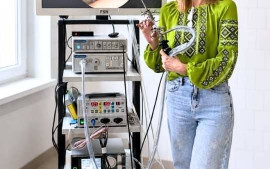
The Loran Group portfolio includes a comprehensive range of solutions for endoscopic urology: flexible and rigid ureterorenoscopes, laser systems for lithotripsy, endoscopic towers, instruments, and consumables, allowing full operating room setup for RIRS and other minimally invasive procedures.