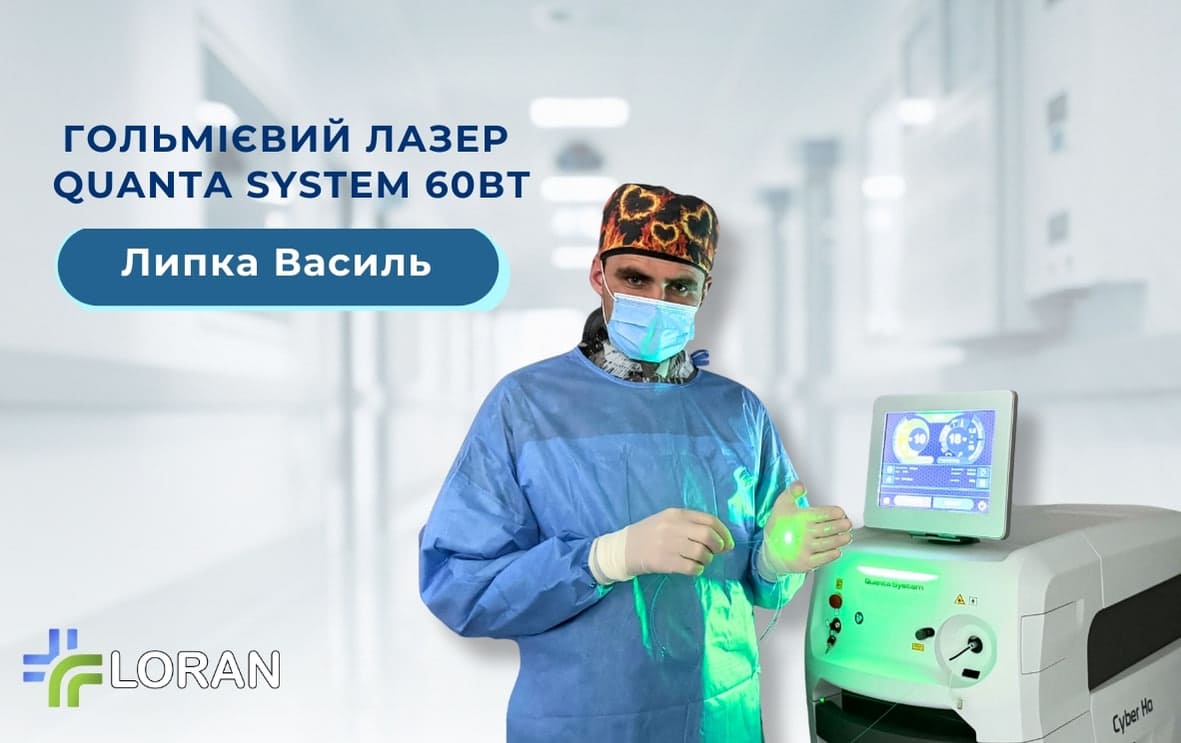
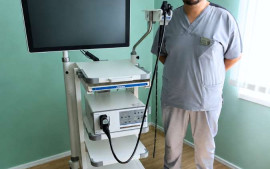
Modern urology is increasingly focused on techniques that allow physicians to work with maximum control while enabling patients to undergo treatment with a lower risk of complications and faster recovery. One such tool in daily clinical practice is the holmium laser. Vasyl Lypka, a urologist at the MedGarden Medical Center in Chernivtsi, shares his real-world experience of using this technology while performing endoscopic procedures of varying complexity on a regular basis.
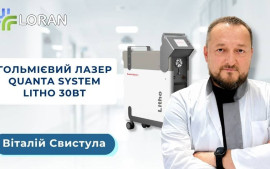
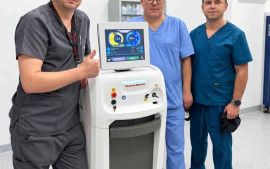
In his practice, the physician uses the 60 W holmium laser from Quanta System as a versatile solution for the treatment of urolithiasis and disorders of the upper and lower urinary tract. This is not about isolated cases, but about the systematic use of laser technologies in everyday clinical work.
Control during lithotripsy as the key to predictable outcomes
One illustrative example of holmium laser application is retrograde intrarenal surgery (RIRS). According to the physician, thorough preoperative preparation with mandatory computed tomography makes it possible to accurately assess the number, location, and density of stones and to plan the surgical strategy in advance.
During contact lithotripsy, control over the stone is crucial. The ability to adjust laser parameters helps prevent uncontrolled stone migration. The stone remains stable within the visual field, significantly simplifying the surgeon’s work, especially in anatomically challenging areas such as the lower calyces or the renal pelvis. As a result, the stone is gradually converted into fine dust without the need for additional manipulations.
Flexibility in endoscopic procedures
Clinical practice shows that maximum settings are not required for most renal stones. The physician emphasizes that effective lithotripsy is often achieved with moderate parameters, which reduces overall tissue impact and increases procedural safety. At the same time, a single intervention may require a transition to working with soft tissues.
In such cases, it is important that the laser system allows rapid adaptation to new clinical tasks without changing equipment or taking prolonged breaks. This makes it possible to perform combined procedures—from stone fragmentation to tissue incision or coagulation – within a single surgical workflow.
Tissue safety and complication prevention
The holmium principle of action is based on interaction with water in tissues, ensuring precise local impact and minimizing bleeding. According to Vasyl Lypka’s observations, this is particularly important when working in the urethra, ureter, or during procedures involving the prostate. Controlled incision and predictable coagulation reduce the risk of strictures and other postoperative complications.
The physician also notes that the use of a holmium laser fits well into modern concepts of recurrence prevention, as it allows for gentle tissue handling and limits the zone of thermal exposure.
Organizational benefits for the clinic
From a practical standpoint, the versatility of a holmium laser system is important not only for the surgeon but also for the medical facility as a whole. A single device can be used for different types of procedures, simplifying surgical planning, staff training, and optimizing investments in equipment.
Equally important is the support provided by the supplier. In Ukraine, Quanta System equipment is supplied by the medical equipment company Loran Group, which provides training for medical staff and service support. This approach allows clinics to integrate the technology into their workflows more quickly and to use it confidently in complex clinical cases.
Practical experience as a source of professional development
The experience of Vasyl Lypka confirms that a 60 W holmium laser from the Italian brand Quanta System can be an effective tool in the hands of a physician who actively works with endoscopic techniques. Real clinical cases presented in video format help colleagues better understand the rationale behind parameter selection, procedural sequence, and the nuances of working with stones and soft tissues.
Such exchange of practical experience is an important element in the development of modern urology and the wider adoption of minimally invasive technologies in clinical practice across Ukraine.
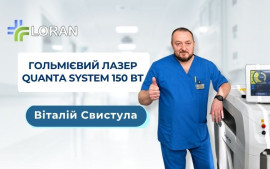
The Loran Group YouTube channel also features other video testimonials from physicians working with Quanta System holmium lasers. In particular, Bohdan Dzhuran, managing partner of the Dievo Clinic, presents a clinical case of laser enucleation of the prostate, while Pavlo Forostyanyi, Head of the Urology Department at the Central Clinical Hospital of the State Border Guard Service of Ukraine, shares his experience using Quanta System holmium lasers with 60 W and 150 W output in daily urological practice.